Lifts for vertical material handling
Q-System delivers lifts for efficient vertical transport of products, unit loads and pallets in industrial material handling systems. Designed for stable movement between conveyor levels, they are used where automated flow requires reliable transfer between different heights and process zones.
Lifts for efficient vertical movement
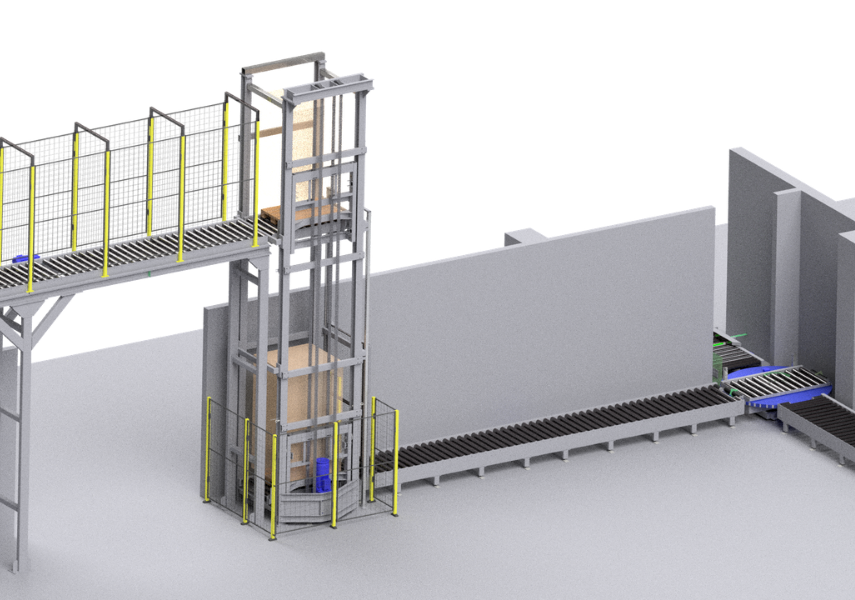
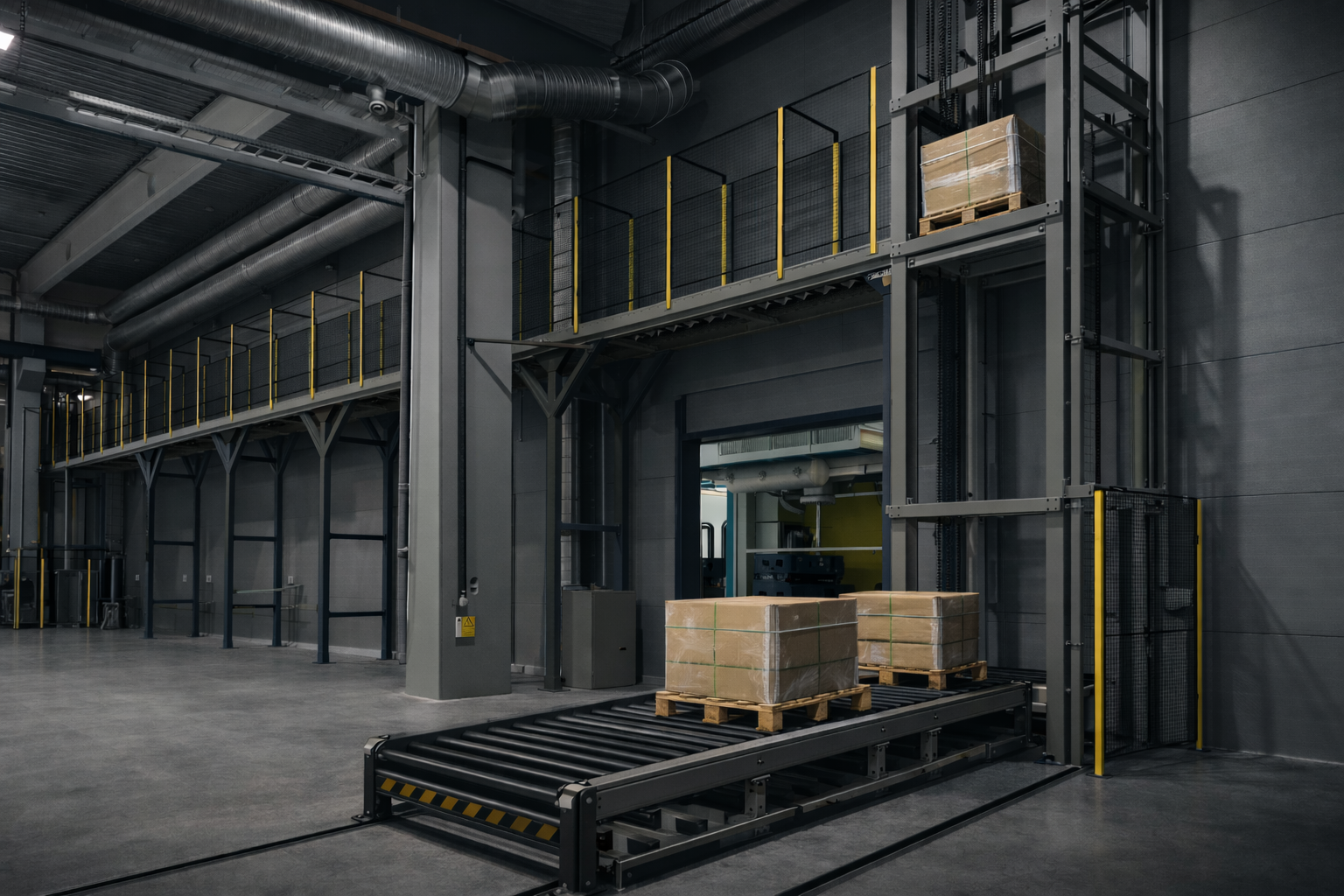
Lifts are used in conveyor systems where products or loads need to move between different levels as part of the overall material flow. They provide controlled vertical transfer and are especially relevant in layouts where the system includes multiple conveyor heights, storage levels or process zones connected across more than one level.
Lifts are typically used where:
- Products or loads must move vertically between conveyor sections
- The system includes more than one transport level
- Automated feeding or removal is required
- Vertical movement must be integrated into the wider conveyor flow
This makes lifts an important solution in material handling systems where horizontal transport alone is not enough.
Move loads between levels and process zones
A lift adds vertical transport to the conveyor system. Instead of only moving products forward or sideways, the lift makes it possible to move them up or down in a controlled and repeatable way between selected system levels.
This is especially useful applications where:
- Goods must move between floor levels or conveyor heights
- Storage positions are arranged vertically
- Feeding and discharge points are placed at different elevations
- The layout must make efficient use of available space
By adding vertical transfer, lifts help create more compact and functionally efficient system layout.
Where lifts are typically used
Lifts are used in a wide range of industrial material handling applications where products or loads need to move between levels as part of an automated or semi-automated process.
Typical applications include:
- Vertical transfer between conveyor lines
- Feeding and discharge of goods stored at multiple levels
- Movement between buffer positions and process lines
- Integration in warehouse and intralogistics systems
- Connection between transport modules in multi-level layouts
This makes lifts highly relevant in systems where vertical movement is a necessary part of the material flow rather than separate handling function.
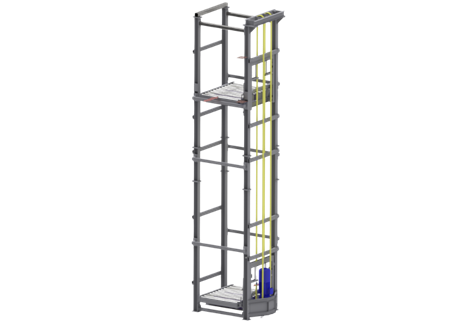
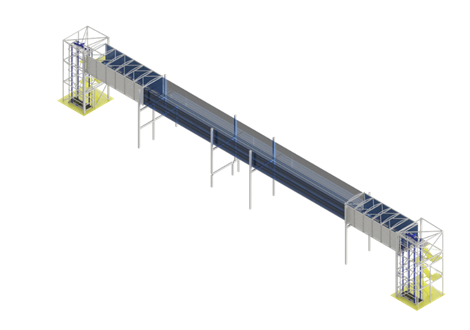
Lifts for products, unit loads and pallets
Lifts can be configured for different load types depending on the application and the conveyor principle used on the lift carriage.
Depending on the system design, a lift may be used for:
- Products in internal process flow
- Unit loads moving between conveyor levels
- Pallet transport in automated handling systems
- Feeding and discharge of goods between storage positions
A key advantages is that the lift can be integrated with different conveyor types depending on the task. Depending on the application, the lift carriage can be designed with different conveyor principles such as:
- Roller conveyors
- Chain conveyors
- Belt conveyors
This makes lifts highly adaptable in conveyor system where the transport principle above and below the lift may vary.
Technical design options
Lifts are designed according to the load, the required vertical movement and the surrounding conveyor system.
Typical design considerations include:
- Load type and dimensions
- Vertical travel height
- Number of levels served
- Conveyor type mounted on the carriage
- Throughput and cycle requirements
- Integration with controls and safety systems
- Fencing and guarding requirements
Depending on the application, the lift may be designed to support:
- Automated vertical transfer between conveyor levels
- Integration with roller, chain and belt-based systems
- Feeding and removal from storage of buffer levels
- Reliable and repeatable movement in industrial operating environments
This allows the lift to be dimensioned around the actual system task rather than treated as a standard standalone unit.