Belt conveyors for industrial material handling
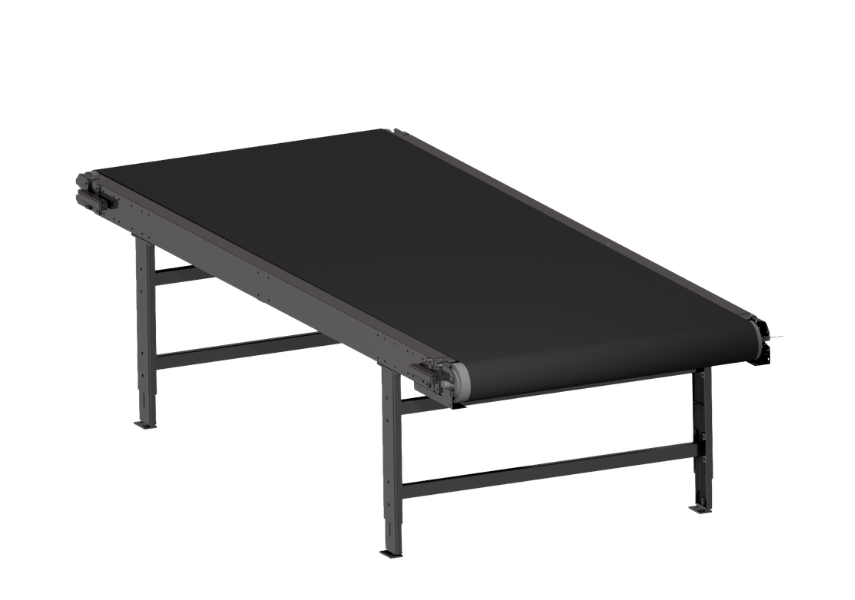
Q-System delivers belt conveyors for efficient and controlled transport of products and materials across industrial material handling systems. Designed for stable flow and flexible integration, they are well suited for horizontal and inclined transport in production, sorting and internal logistics environments.
Belt conveyors for industrial material flow
Belt conveyors are used across a wide range of industrial applications where products or materials need to move reliably between workstations, process areas, sorting lines and internal handling zones. They provide a stable conveying surface and controlled product flow, making them suitable for both horizontal and inclined transport in layouts where smooth and repeatable movement is required.
Belt conveyors are typically used where:
- Products or materials require continuous support during transport
- The conveying path includes horizontal or inclined sections
- Stable flow and consistent movement are important
- The conveyor must integrate into a broader material handling system
Because the system can be adapted to the task, belt conveyors are used in everything from production support and box handling to sorting systems and internal process transport.
Designed for smooth and controlled transport
One of the main advantages of belt conveyors is their ability to move products and materials in a stable and controlled way across the full transport path.
This makes them particularly suitable for applications where:
- The product should not rely on roller contact points
- The material flow needs to remain smooth and continuous
- The transport path includes transitions or inclines
- Reliable movement between process steps is essential
The conveying surface supports a more even and predictable flow, which is especially valuable in applications where product handling quality and operational consistency are important. Belt conveyors are therefore often used in industrial systems where the goal is not only to move the load, but to move it in a controlled and dependable way.
Suitable for light, medium and heavy loads
Belt conveyors can be configured for a wide range of transport tasks, from lighter internal handling to more demanding industrial conveying of heavier goods and materials.
Depending of the application, the system can be designed for:
- Light-duty internal transport
- Medium-duty product or material flow
- Heavy-duty industrial handling
- Horizontal conveying
- Inclined transport between process levels
This makes belt conveyors a flexible conveyor type where the same basic transport principle can be adapted to different load conditions, layout and handling requirements.
Used across different industrial applications
Belt conveyors are used in a wide range of industrial and internal transport setups where products or materials need to move efficiently through the process.
Typical applications include:
- Box and carton transport in distribution and internal logistics
- Product flow between workstations and process areas
- Material transport in sorting and recycling systems
- Internal transport in industrial laundry systems
- Inclined conveying between different process levels
- Integration in larger conveying and handling systems
This broad application range makes belt conveyors one of the most versatile conveyor types in industrial material handling. Because the transport surface supports a wide variety of goods and materials, the same conveyor principle can be used across very different operating environments.
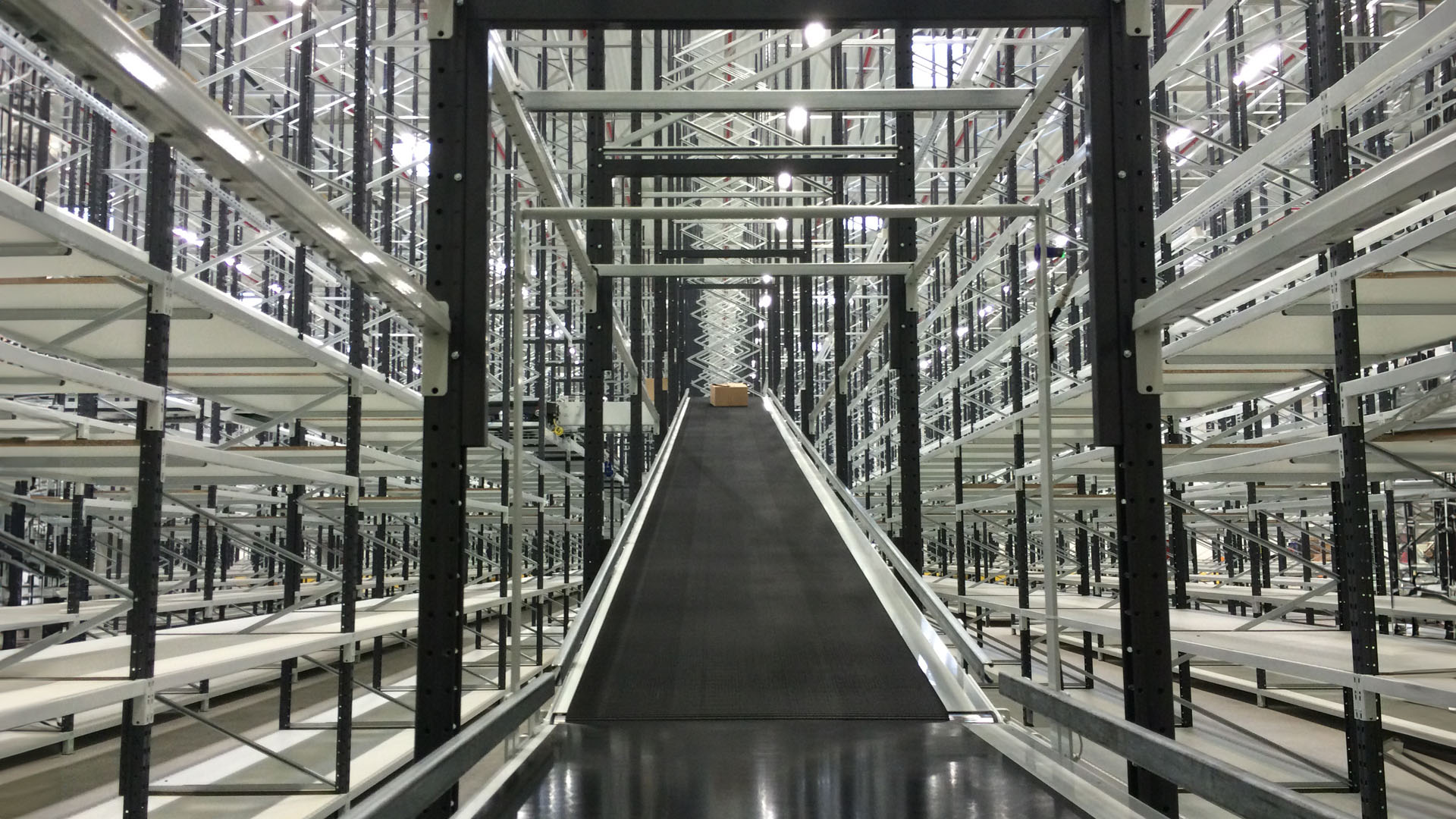
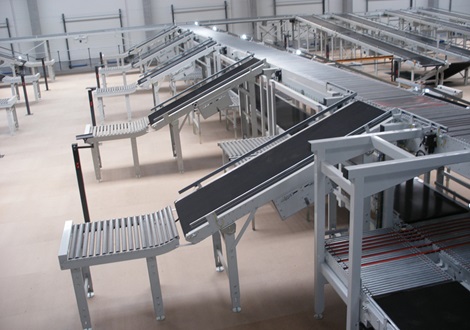
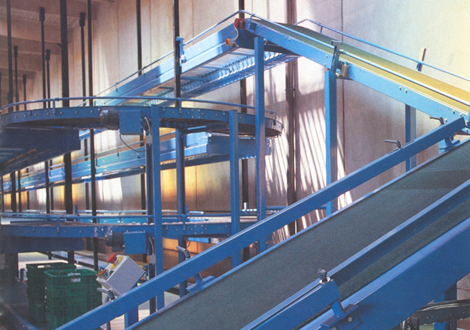
Belt conveyors for inclined transport
Belt conveyors are often used where products or material need to move between different levels or follow a defined path through multiple process zones.
Typical belt conveyor paths may include:
- Horizontal transport between stations (lifts)
- Inclined conveying to elevated process areas
- Downward transport between connected sections
- Transitions between conveyor modules in larger layouts
This makes belt conveyors highly suitable in systems where space, elevation changes and process flow all influence the conveyor design. Because the system can be adapted in length, width and angle, it can be integrated into layouts with very different technical and operational requirements. The technical material you shared also supports this clearly, showing conveyor solutions designed for both horizontal and inclined transport.
Technical design options
Belt conveyors are configured according to the product or material, the transport path and the required operating conditions.
Typical design considerations include:
- Conveyor length and width
- Horizontal or inclined layout
- Product dimensions or material charactetistics
- Load weight and throughput requirements
- Speed and flow control
- Drive configuration
- Support structure and integration with surrounding equipment
Depending on the application, the system may be designed to support:
- Stable transport across flat sections
- Controlled movement on inclined sections
- Reliable flow through process areas
- Repeatable performance in demanding operations environments
This allows the belt conveyor be to dimensioned around the actual handling task rather than forcing the application into fixed standard setup.
Integrated with broader conveyor systems
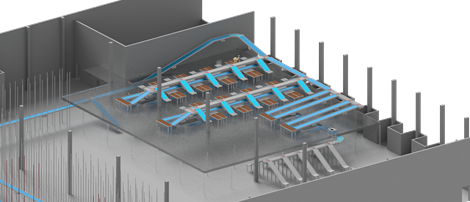
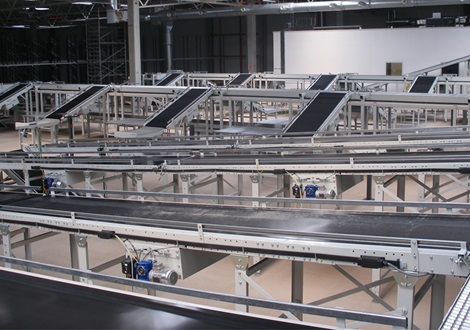
Belt conveyors are rarely used as standalone units. In most industrial environments, they form part of a broader material handling system where multiple conveyor principles work together.
They are commonly integrated with:
- Roller conveyors
- Chain conveyors
- Lifts
- Turntables
- Transfer cars
This allows products and materials to move efficiently between transport surface, elevations and process steps while maintaining stable and controlled flow through the system. By combining different conveyor types, it becomes possible to build complete material handling systems that are both operationally efficient and technically suited to the task.
Frequently asked questions (FAQ)
1. Which product types can belt conveyors handle?
Our belt conveyors are designed to handle a wide range of product types, including boxes, trays, plastic containers, cartons, bundled goods, and other customer-specific items. They are especially suitable in applications where products require a stable, continuous conveying surface and more controlled transport than roller or chain-based handling typically provides.
2. When should a belt conveyor be used instead of a roller or chain conveyor?
A belt conveyor is often the right choice when the application requires even, smooth, and continuous transport, or when the product does not have the support conditions needed for roller or chain conveying. Belt conveyors are also well suited for products that need more stable positioning and controlled handling throughput the transport flow.
3. Can belt conveyors be configured for inclines, curves and guided transport?
Yes. Belt conveyors can be configured for a wide range of layouts, include horizontal transport, inclined sections, transfer sections, curves and side-guided transport, depending on the application. This makes them suitable for systems where product flow needs to be adapted to the available space, height difference, or process layout.
4. Can belt conveyors be customized in width, length, and speed?
Yes. Our belt conveyors are 100% customer-specific and can be adapted in belt width, conveyor length, and speed depending on the required application. Examples include belt widths such as 200 mm, 400 mm, and 600 mm, as well as long conveyor sections depending on the system design.
5. Can belt conveyors be integrated into larger conveyor and automation systems?
Yes. Belt conveyors can be integrated with other conveyor types and surrounding equipment as part of a larger internal material handling solution. Depending on the project, they can also be combined with automation systems, product guidance, transfer points, and customer-specific process interfaces.