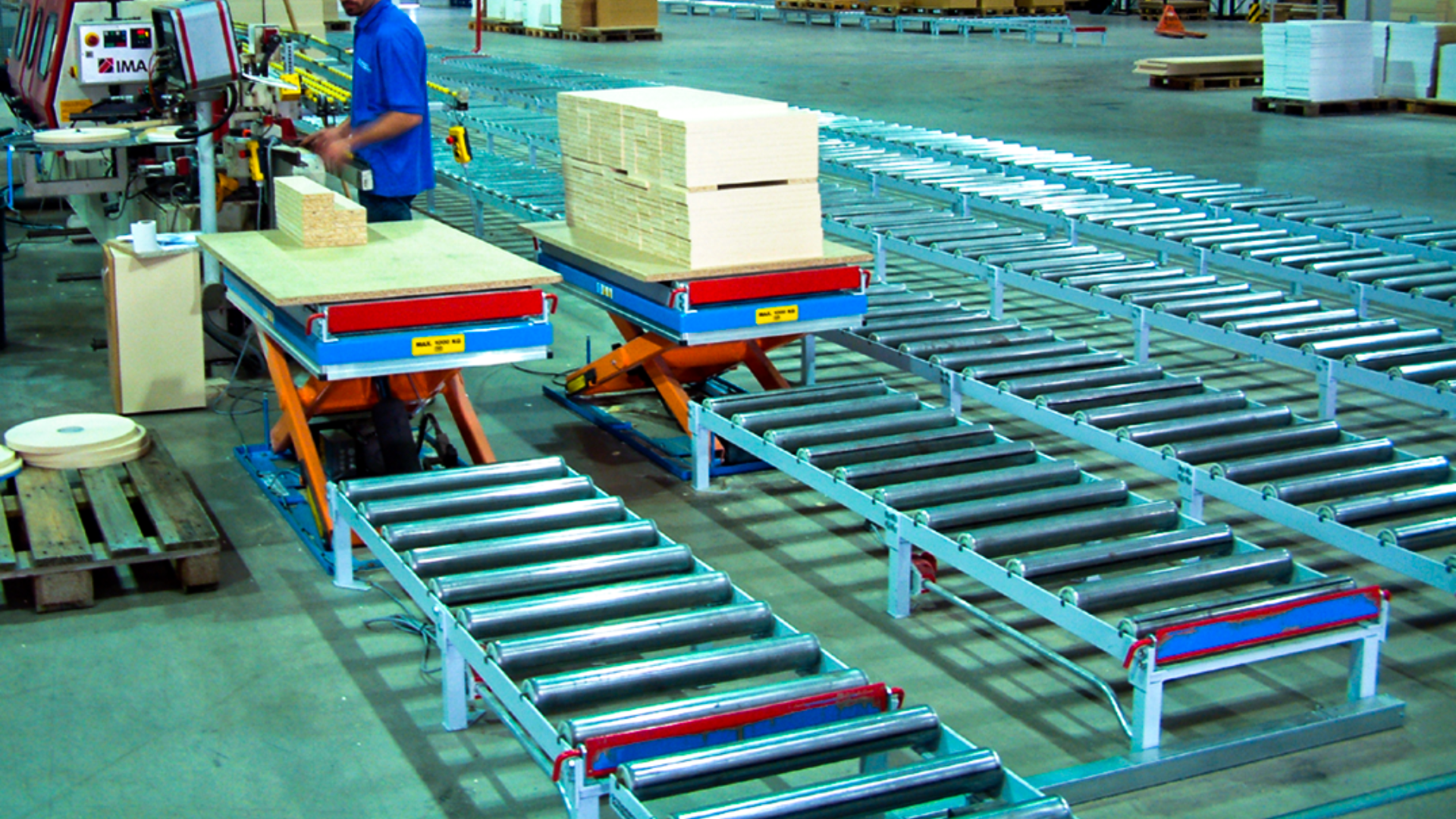
Lifting tables for industrial material handling and ergonomics positioning
Q-System delivers lifting tables for controlled height adjustment, load positioning and ergonomic handling in industrial environments. Designed for reliable operation and flexible integration, they support both manual handling tasks and conveyor-based material flow.
Lifting tables for controlled height adjustment
Lifting tables are used in industrial applications where loads need to be raised, lowered or positioned at the correct working height.
They are typically applied in situations where:
- Operators require better working ergonomics
- Loads must be positioned for handling or processing
- Height differences must be managed locally
- Material flow requires controlled vertically positioning
Lifting tables are used for controlled positioning of loads at a defined point in the process, where height adjustment is required.
Improve ergonomics and reduce manual strain
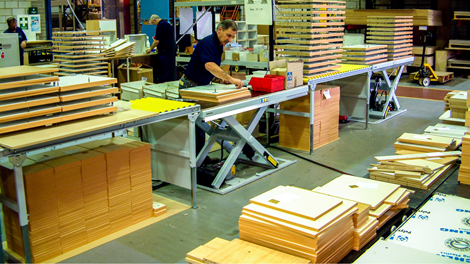
Lifting tables play an important role in improving working conditions in production and internal material handling.
They help:
- Reduce heavy lifting and manual strain
- Improve working height for operators
- Prevent repetitive stress injuries
- Create more stable handling conditions
This makes them especially relevant in environments where manual interaction with goods is part of the process.
Capacity and key technical data
Lifting tables are designed to handle a wide range of loads depending on the application.
Typical reference values include:
- Load capacity: 500-1500 kg
- Length: 1500-3000 mm
- Width 600-900 mm
- Minimum height: approx. 280 mm
- Lift height: adapted to application
Higher capacities and customized dimensions can be provided depending on the required load, lifting range and operating conditions.
Types of lifting tables and configurations
Lifting tables are not one fixed product type. Depending on the application, they can be configured in several mechanical designs and functional setups to match both handling requirements and system integration. Typical solutions include:
Single scissor lifting tables
Used for standard lifting tasks where moderate lift height and stable load positioning are required. Suitable for both manual handling and conveyor integration.
Double scissor lifting tables
Used in applications requiring higher lifting range while maintaining stability. Ideal where larger vertical movement is needed within a limited footprint.
Low-profile lifting tables
Designed for applications where a low minimum height is required. Often used where loads must be placed directly onto the table without ramps or pits.
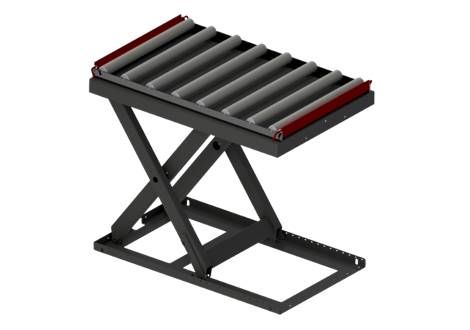
Lifting tables with conveyor tops
Used where loads must move across the lifting tables as part of a conveyor system. Available in both driven an non-driven configurations depending on flow requirements.
Lifting tables with rotating or customized platforms
Used in applications where loads need to be positioned, turned or aligned during handling. This may include rotating tops or specially adapted platforms.
Mobile or repositionable lifting tables
Used in flexible production environments where lifting is required at different positions rather than fixed installation points.
Platform options and conveyor integration
Depending on the application, lifting tables can be equipped with different platform types.
These may include:
- Flat platforms for manual handling
- Non-driven roller conveyors
- Driven roller conveyors
Additional functional options may include:
- Tiltable and stops
- Pneumatic braking on rollers
- Rotating platforms
- Cut-outs for forklift handling
This allows lifting tables to function bots as:
- Ergonomic workstations
- Integrated elements in conveyor systems
Technical features and safety
Lifting tables are designed for safe and reliable operation in industrial environments.
Standard features may include:
- Adjustable lowering speed
- Pressure-compensated lowering valve
- Hose burst protection on cylinders
- Manual emergency lowering
- Safety edge protection on all sides
- Mechanical safety lock for service
These features ensure controlled operation and compliance with industrial safety requirements.
Used in production and internal material handling
Lifting tables are typically used in applications where loads must be handled, positioned per processed at a specific height.
Typical use cases include:
- Workstations in production lines
- Manual handling zones
- Pallet or unit load positioning
- Integration in conveyor systems
- Loading and unloading points
- Areas where ergonomic handling is required
They are especially relevant where improving operator conditions and handling efficiency is priority.
Designed around the application
The right lifting table depends on more than load capacity alone.
It is typically designed based on:
- Load type and dimensions
- Required lift height
- Available space
- Operator interaction
- Integration with surrounding equipment
- Automation requirements
This ensures the solution supports both technical handling task and the working environment.