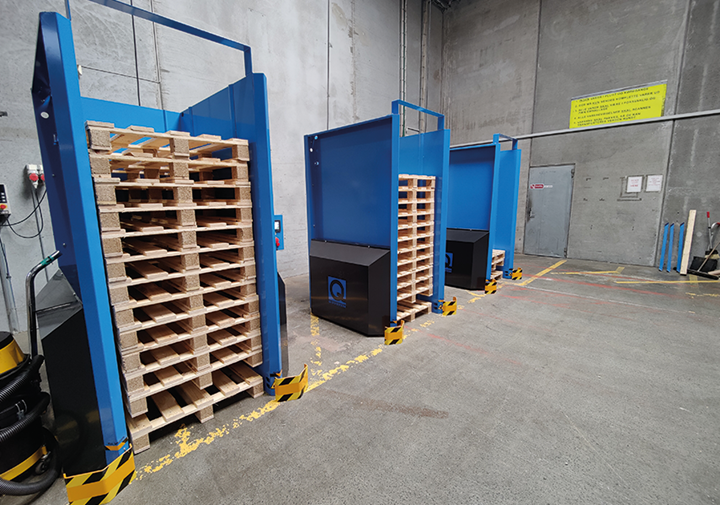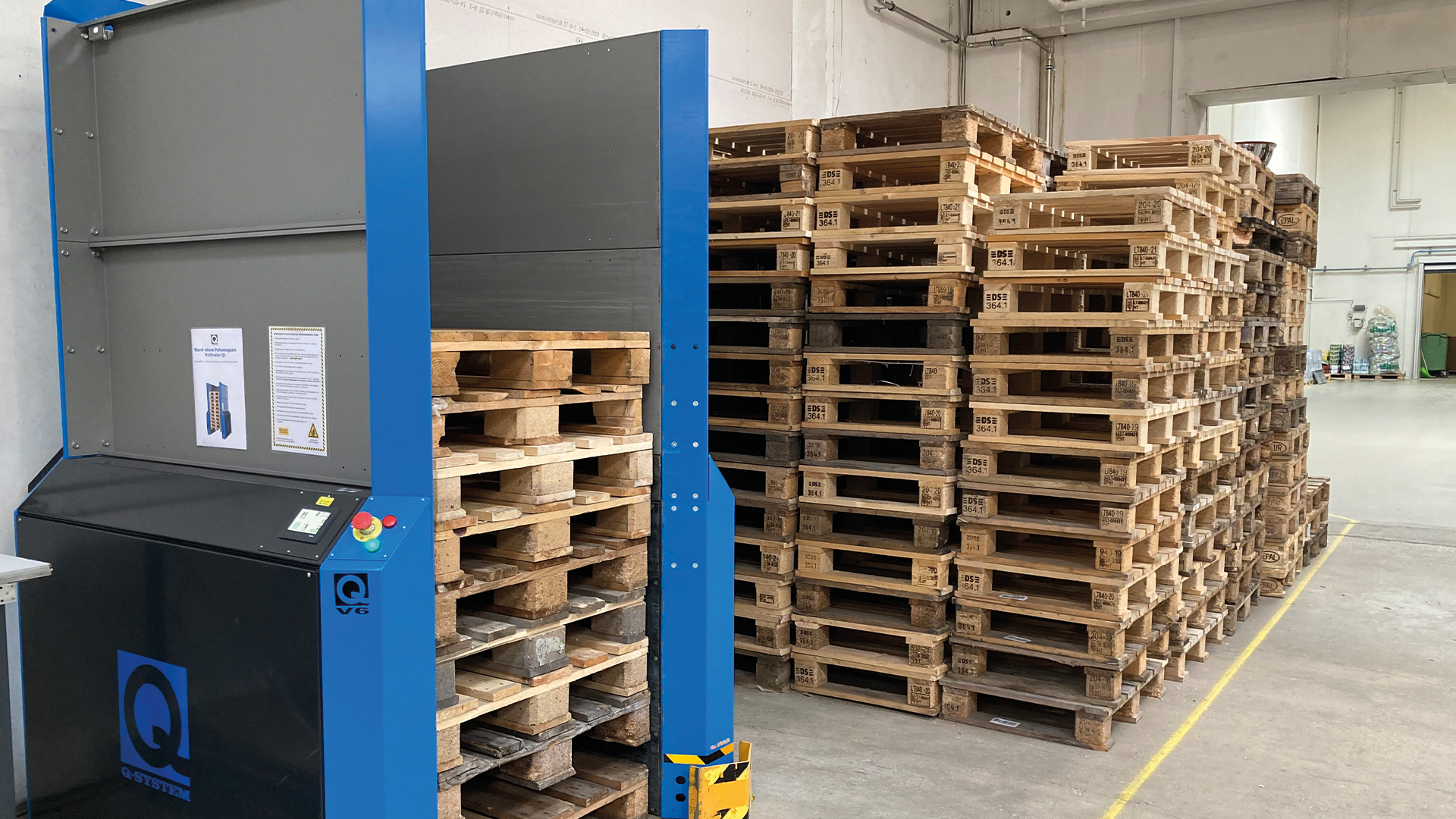
Automated pallet magazines for industrial pallet handling
Q-System pallet magazines enable automatic stacking and destacking of pallets in industrial environments. Designed for seamless integration with conveyor systems and automation solutions, they reduce manual handling and improve operational efficiency.
Pallet magazine - Function and application
A pallet magazine is an automated system used to stack and destack pallets in a controlled and efficient process. In industrial environments, pallet magazines ensure a consistent pallet flow and eliminate the need for manual handling.
Pallet magazines are widely used in:
- Production environments
- Warehouse and distribution centers
- End-of-line packaging areas
- Internal logistics systems
They are particularly valuable in applications where pallets are handled manually, helping to reduce physical strain and improve workflow.
Pallet magazine configurations and system types
Q-System offers several pallet magazine configurations to match different throughput requirements, layout and automation levels. All our pallet magazines are compatible with AMR/AGV's.
Q1 - Single pallet magazine
Designed for automatic handling of one pallet at a time.
- Capacity: 8, 15 or 25 pallets
- Max load: up to 835 kg
- Standard EURO pallets (1200x800 mm)
👉 Download Q1 pallet magazine data sheet (PDF)
Typical applications:
- Retail environments receiving goods on pallets, where empty pallets need to be collected and stacked
- Back-of-store areas with continuous pallet intake
- Replacing of manual pallet stacking
Q5 - High-capacity pallet magazine
Designed for higher throughput and controlled batching.
- Handles 1-5 pallets per cycle
- Capacity: up to 30 pallets
- Max loads: up to 1000 kg
👉 Download Q5 pallet magazine data sheets (PDF)
Typical applications:
- Production environments where pallets are delivered in stacks (e.g. 1-5 pallets at a time)
- Facilities where multiple pallets need to be separated and fed into the system
- High-throughput environments requiring faster pallet handling
- Transfer points where stacked pallets enter automated systems
Q Double - Dual pallet magazine
Designed for simultaneous handling of two pallets.
- Two pallets handled per cycle
- Capacity: up to 30 pallets
- Max load: up to 1000 kg
👉 Download QDouble pallet magazine data sheet (PDF)
Typical applications:
- Productions where two pallets are transported side by side and need to be handled togehter
- Production flows with continuous pallet transport
- Transfer points between conveyor systems
- High-capacity environments where two pallets are processed per cycle
Q1/2 - Pallet magazine for half pallets
Designed for handling half pallets and smaller load carriers in automated pallet handling systems.
- Capacity: 15 or 25 pallets
- Max load: 835 kg
- Supports half pallets
👉 Download Q1/2 pallet magazine data sheet (PDF)
Typical applications:
- Retail environments using half pallets
- Distribution centers handling half pallet formats
- Applications requiring handling of smaller pallet units
Integration with conveyors and industrial automation
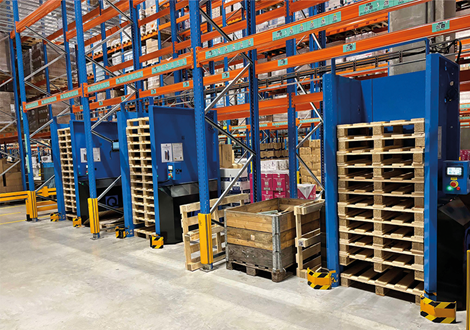
Pallet magazines are typically integrated into larger pallet handling and automation solutions.
They are commonly used:
- Production lines
- Warehouse and distribution centers
- Packaging and end-of-line systems
- Internal transport systems replacing manual pallet handling
Operational and ergonomic benefits
Pallet magazines improve both operational efficiency and working conditions:
- Reduced handling time per pallet
- Increased productivity
- Elimination of manual pallet handling
- Reduced forklift traffic
- Improved workplace safety
- Reduced physical strain for operaters
This makes pallet magazines particularly valuable in environments where pallets are handled manually.
Customization options and system configurations
Available options include:
- Safety covers
- Full stack sensors
- Pallet entry guides
- Forklift protection
- Reinforced construction
- Support for different pallet types and sizes
Each pallet magazines is configurated to match the specific application and integration requirements.