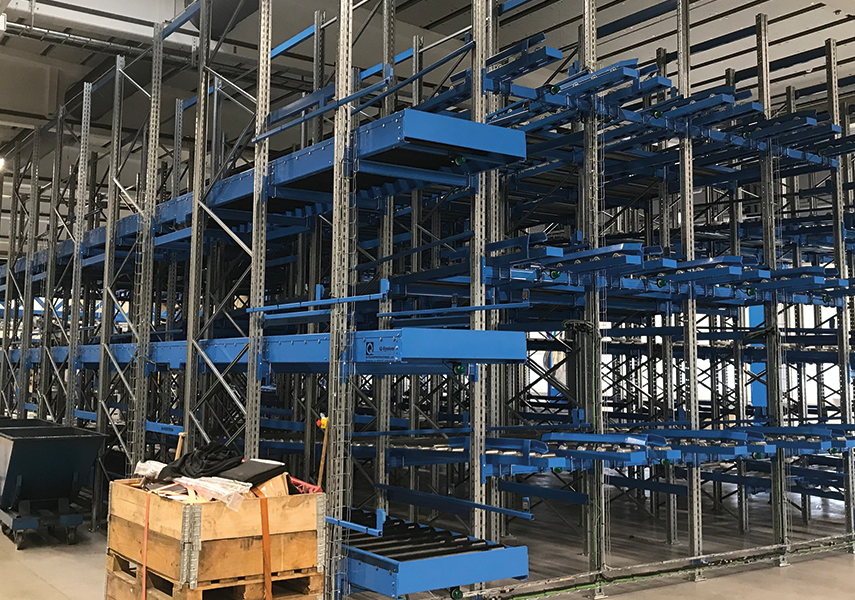
Warehouse and intralogistics systems
We design and deliver automated warehouse and intralogistics systems that ensure efficient pallet flow, zone control, and reliable internal transport across industrial and distribution environments. Our solutions optimize throughput, space utilization, and operational stability from inbound handling to outbound dispatch.
Controlled pallet flow across warehouse zones
Efficient warehouse operations depend on structured and predictable material movement. We engineer conveyor-based intralogistics systems that manage pallet transport between receiving, storage, production interface, and shipping areas.
Our systems support:
- Inbound pallet handling
- Zone-based transport control
- Accumulation before storage or dispatch
- Sorting and routing between warehouse areas
- Cross-docking and staging operations
Each system is configurated to match throughput requirements, routing logic, and facility layout.
Throughput optimization and space efficiency
Warehouse performance is measured in flow capacity and operational efficiency. Our intralogistics systems are engineered to maximize pallet throughput while minimizing congestion and manual intervention.
Systems can be designed for:
- High pallet-per-hour capacity
- Continuous multi-shift operation
- Long-distance internal transport
- Integration across multiple warehouse levels
- Operation in temperature-controlled environments (packaged goods)
By combining modular conveyor systems with optimized layout planning, we ensure scalable performance and stable flow.
Integration with WMS and operational control
Reliable intralogistics intelligent coordination between mechanical systems and digital infrastructure. We integrate conveyor systems with warehouse management and control platform to ensure synchronized pallet movement.
Integration capabilities include:
- PLC-controlled conveyor zones
- Sensor-based accumulation logic
- Communication with WMS and ERP systems
- Dispatch coordination
- Centralized system monitoring
This endures transparency, traceability, and consistent operational performance across warehouse processes.
Typical warehouse system configuration
A warehouse and intralogistics system may include:
- Receiving conveyor lines
- Accumulation and buffering zones
- Transfer modules for routing
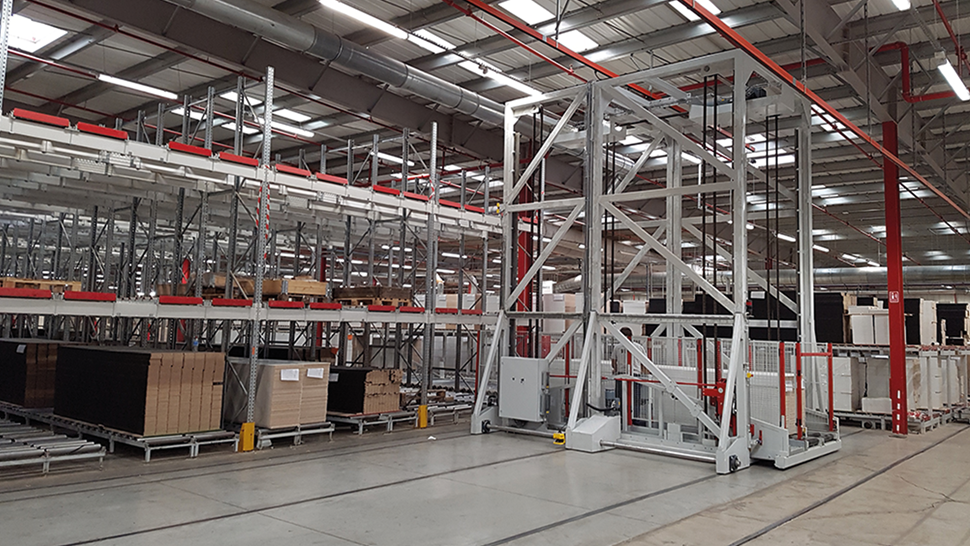
- Vertical lifts between storage levels
- Outbound conveyor systems connected to dispatch
System configuration is defined by pallet type, storage strategy, throughput demand, and warehouse layout.